Категории

How to Select Bus Duct Plug for Panel Board Connection Right

Wrong plug, costly shutdown. Learn how to select bus duct plug for panel board connection by matching amperage, phase config, and housing geometry precisely.
Jun 18th,2026 4 Взгляды

Walk into enough electrical rooms after commissioning and you will find the same problem repeating itself: a bus duct plug that was ordered confidently, installed with full intent, and then discovered — during load testing or the first thermal scan — to be wrong. Not catastrophically wrong, but wrong enough to require a shutdown, a replacement order, and an awkward conversation with the project owner. The mismatch might be an amperage rating that looked correct on paper but ignored the panel's actual incoming breaker capacity. It might be a phase configuration that nobody caught because the plug bodies look nearly identical in catalog photographs. Or it might be a housing geometry that simply does not seat properly on the installed busway, regardless of what the nominal dimensions suggested.

At ZHERUTONG, we process over 200 custom bus duct plug configuration requests per year across industrial projects in Southeast Asia, the Middle East, and Europe. That volume creates a detailed picture of where selection decisions break down — not in theory, but in the actual sequence of events between a project drawing and a commissioned panel board. This guide is built from that picture. It covers the four variables that determine whether a bus duct plug-to-panel connection works safely and durably: load type and amperage matching, physical installation constraints, and cross-manufacturer compatibility. If you are in the middle of an active selection decision, this is where to start.

Why Does Bus Duct Plug Selection Go Wrong So Often?

Most bus duct plug mismatches trace back to three overlooked variables: assuming plug amperage equals busway amperage, ignoring panel board entry geometry, and treating different manufacturers' plugs as interchangeable — none of which are safe assumptions.

The amperage assumption is the most common entry point for errors. An engineer specs the plug at the same rating as the busway run — 630A busway, 630A plug — without tracing the actual load demand at the panel board's incoming terminal. The busway rating describes the conductor's capacity for the full run; the plug rating must reflect the branch demand at that specific tap-off point, which is typically a fraction of that figure and must be matched to the panel's incoming protection device.

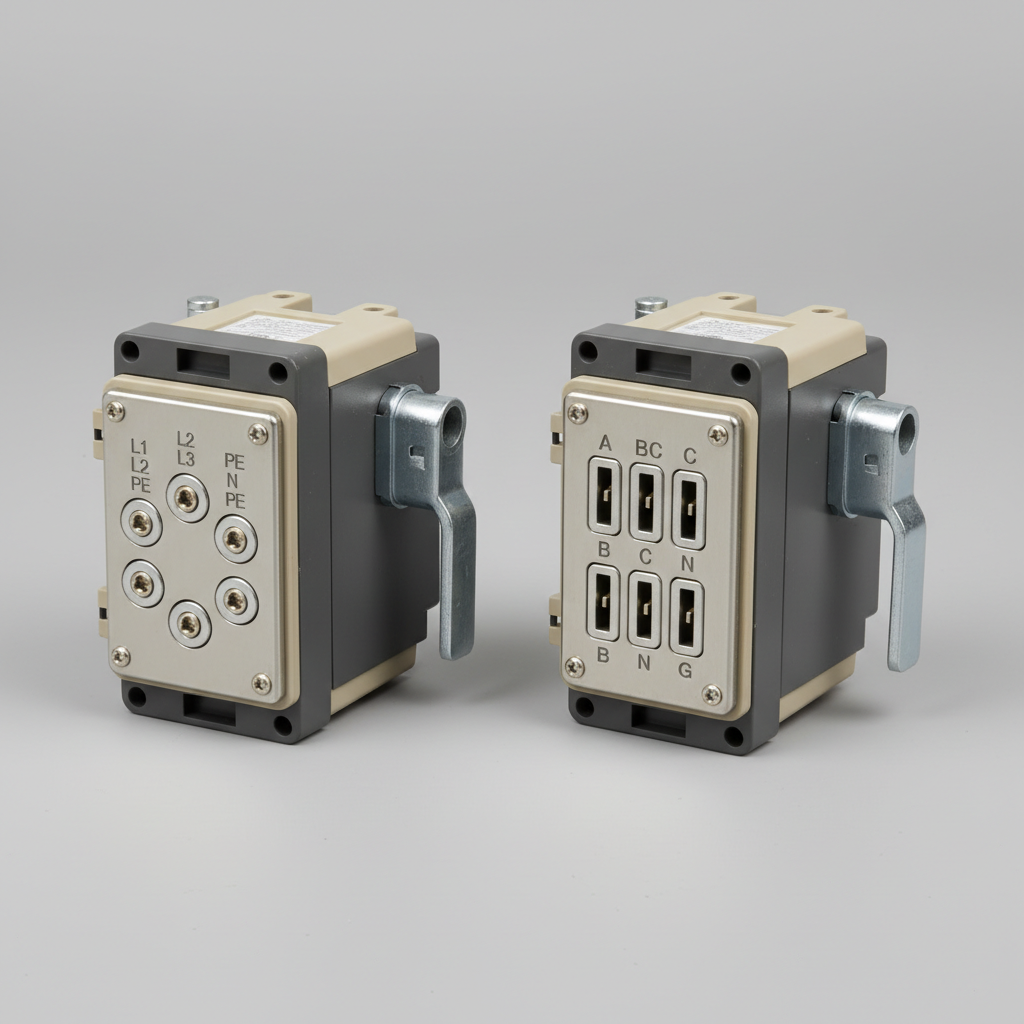
Phase configuration errors are subtler and arguably more dangerous. Three-phase and single-phase plug bodies from the same product family can share nearly identical external housings. In catalog images, the difference is invisible unless you know exactly where to look. On a fast-moving installation site, the wrong body gets installed, and the error surfaces only when the protection devices behave unexpectedly under load.

Housing geometry tolerance is a problem that appears most often in retrofit projects. Even within a single manufacturer's product family, housing width, depth, and tap-off angle can vary across production generations. A plug specified from a ten-year-old drawing may not seat correctly on the current busway housing, even if the part number looks like a match.

On the procurement side, we see a consistent pattern in retrofit inquiries: purchasing teams source replacement plugs from secondary suppliers based on amperage rating and approximate dimensions alone, without verifying OEM contact geometry. In our review of retrofit inquiries received over a recent 18-month period, approximately 34% involved plugs that were electrically rated correctly but physically incompatible with the installed busway housing. Correct rating, wrong plug.

How Do You Match Bus Duct Plug Amperage Rating to Your Panel Board?

The correct amperage rating for a bus duct plug serving a panel board connection is determined by the panel's incoming breaker rating, not the busway's full-run capacity — and the plug must be rated equal to or greater than that breaker, never lower.

Understanding this requires treating ampacity as a hierarchy, not a single number. The sequence runs: busway full-run ampacity → plug tap-off rating → panel incoming breaker rating → panel total connected load. These are four distinct values. Collapsing them into one figure — which is what happens when someone simply matches the plug to the busway rating — introduces either under-protection or unnecessary physical bulk into the installation.

For panels serving continuous loads, the calculation requires an additional step. Under IEC and NEC continuous load rules, a circuit running at full demand for three or more hours requires the protective device to be rated at 125% of the continuous load. This means the bus duct plug amperage rating compatibility guide for continuous load panels follows a straightforward formula: divide the continuous load by 0.8 to find the minimum plug rating. A panel with a 160A continuous load requires a minimum 200A plug. Specifying a 160A plug in this scenario is not conservative — it is undersized.

Temperature derating is the variable most frequently absent from initial specifications. Published ampacity ratings for bus duct plugs are typically established at 40°C ambient. Industrial plant environments — particularly in Southeast Asia and the Middle East, where a significant portion of ZHERUTONG's project base operates — routinely run at 50 to 55°C in the electrical room. At those temperatures, a 10 to 15% ampacity reduction per 10°C above the rated ambient is a reasonable working figure, depending on the insulation class of the plug's internal conductors. A 400A plug in a 50°C environment may carry only 340 to 360A reliably. This is not a marginal difference.

Non-linear loads introduce a third derating layer that is increasingly relevant as VFD-driven equipment becomes standard in manufacturing facilities. Variable frequency drives generate harmonic currents that increase the RMS current above the apparent load figure. For panels serving VFD-controlled motors, applying IEC 61439 harmonic correction factors before finalizing the plug rating is not optional — it is the difference between a specification that holds over time and one that produces unexplained thermal events within the first year of operation.

The table below provides a working reference for derating decisions by load type:

Load Type

Typical Power Factor

Recommended Plug Derating Factor

Notes

Resistive heating loads

1.0

None required

Linear load, predictable current

Motor loads (DOL start)

0.85–0.90

5–10%

Starting current surge; verify breaker coordination

VFD-controlled motors

0.90–0.95 (displacement)

15–20%

Harmonic derating required; consult IEC 61439

Mixed lighting/HVAC panels

0.80–0.88

10–15%

Diversity factor applies; assess peak demand carefully

Is a Higher-Rated Plug Always the Safer Choice?

Over-rating a bus duct plug is not inherently safe — an oversized plug may not trigger upstream protection at the correct fault current threshold, and its physical mass can create mechanical stress on the busway tap-off point.

This is a persistent misconception in procurement-driven projects where the instinct is to add margin by selecting the next amperage tier up. The problem is that protection coordination depends on matched ratings. If a panel is protected by a 250A incoming breaker but the tap-off plug is rated at 630A, the protection discrimination between the plug and the busway main protection device becomes unreliable. Under a fault condition, the wrong device may operate first.

There is also a physical dimension to this problem. Higher-amperage bus duct plug bodies are physically larger and heavier. A 400A plug body forced onto a tap-off groove designed for 250A creates housing stress at the contact engagement point — a stress concentration that is invisible at installation but becomes an arc flash exposure point under fault current conditions. The correct approach is to select the next standard rating above the panel's incoming breaker, not above the busway run rating.

What Physical and Installation Constraints Should You Verify Before Ordering?

Even a correctly rated bus duct plug will fail at installation if the tap-off position, plug entry angle, cable exit direction, or housing clearance dimensions don't match the physical conditions of your panel board location.

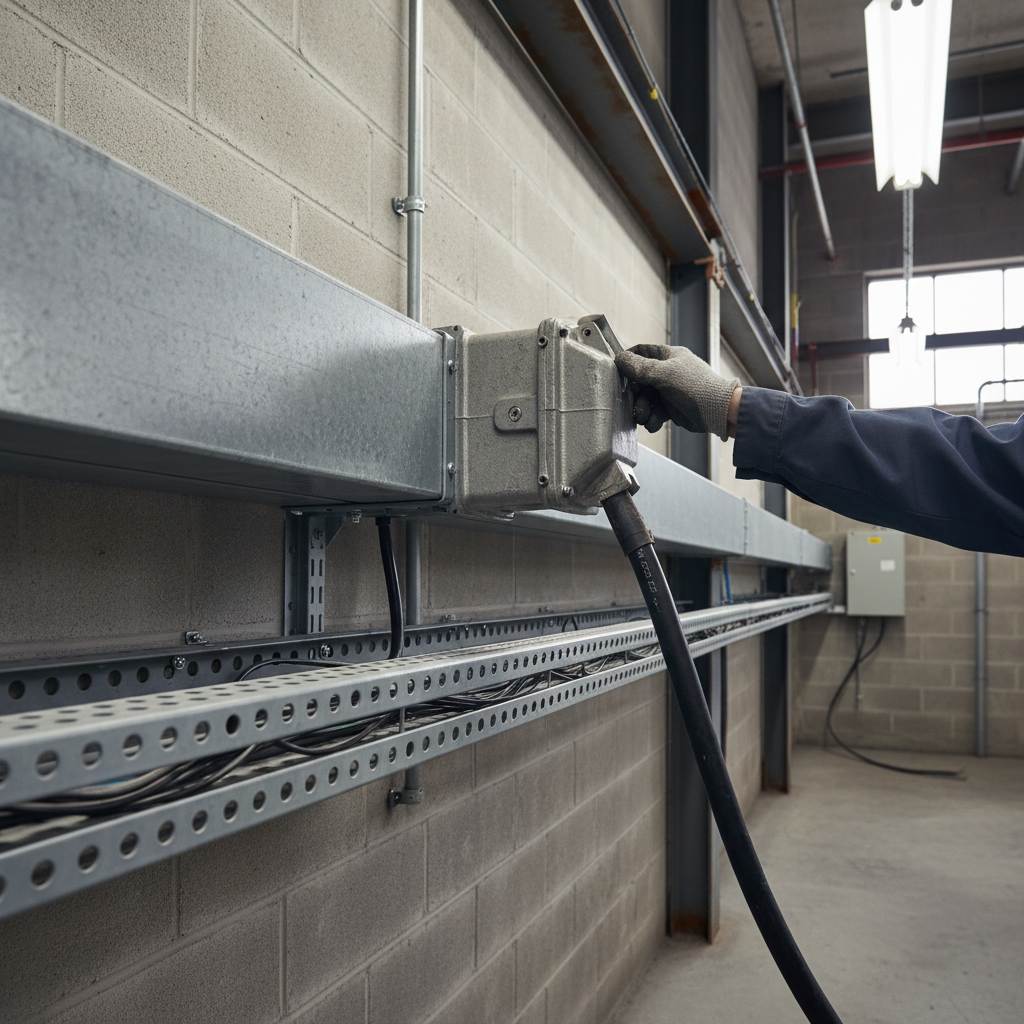
Tap-off entry orientation is the first physical constraint to confirm. Top-entry, side-entry, and bottom-entry plug configurations are not interchangeable — the locking groove profile and contact engagement direction are different for each. On a busway run where only one face is accessible due to wall proximity or structural steelwork, the entry orientation is fixed by the installation, not by preference. Ordering the wrong orientation means the plug physically cannot be installed without repositioning the busway, which is rarely an option in a live facility.

Cable exit direction is closely related but separately specified. Plug bodies are manufactured with fixed cable exit orientations — top, bottom, left, or right relative to the plug face. In tight electrical rooms or where cable trays are already routed, the exit direction determines whether the outgoing cable can reach the panel board without being bent below its minimum bending radius. Insulation damage from a forced bend radius does not appear immediately; it typically surfaces as a fault within 6 to 18 months of installation, at which point the failure mode is difficult to trace back to the original installation geometry.

Housing clearance is a constraint that becomes critical when multiple tap-off plugs are installed on the same busway run. The plug body protrudes from the busway face; if adjacent plugs are spaced too closely, or if a structural element runs parallel to the busway, the plug housing may conflict physically. ZHERUTONG's standard dimensional drawings for all plug configurations include a clearance envelope diagram specifically for this verification step, and we provide 3D models on request for projects where space is constrained.

Environmental protection class is frequently overlooked until the specification reaches the procurement stage. An IP54-rated plug is adequate for a clean, enclosed electrical room. It is not adequate for a food processing facility with regular washdown cycles, a pharmaceutical plant with humidity control requirements, or an outdoor substation enclosure. Confirm the IP rating required by the installation environment before ordering, not after.

The locking mechanism interface is the final physical variable. Some busway systems use quarter-turn cam locking; others use bolted flange connections. The plug's locking interface must match the busway housing groove profile exactly — not approximately. A plug that seats visually but does not achieve full locking engagement will exhibit contact resistance values significantly above specification from day one.

Can You Use Bus Duct Plugs Across Different Manufacturer Systems?

Cross-manufacturer bus duct plug compatibility is rarely guaranteed and should never be assumed — even when nominal dimensions appear to match, conductor contact geometry and contact pressure specifications differ in ways that create resistance heating and long-term connection failure.

Published housing dimensions in manufacturer catalogs describe the outer body of the plug. They say nothing about the internal contact geometry: the engagement depth of the conductor bar contact, the spring force applied to maintain contact pressure, or the surface finish of the contact interface. Two plugs with identical published outer dimensions can produce dramatically different contact resistance values when installed on the same busway conductor bar.

The consequence of elevated contact resistance is not visible during commissioning. A plug from a secondary manufacturer installed on a busway it was not designed for may achieve full physical insertion and pass a continuity check. The problem appears over months of operation as the elevated resistance generates heat at the contact interface. IEC 60439 specifies that connection resistance at a tap-off point should not exceed 1.5 times the resistance of an equivalent conductor length. In ZHERUTONG's incoming inspection testing of mismatched plug-busway combinations submitted by clients for evaluation, we have recorded values exceeding 2.5 times that threshold — values that produce measurable temperature rises within 6 months and insulation degradation within 2 to 3 years.

When cross-manufacturer use is genuinely unavoidable — typically in retrofit scenarios where the original busway manufacturer has discontinued the product line — the minimum acceptable process is: obtain the OEM dimensional specification sheet for the conductor bar profile, compare contact engagement depth and contact spring force ratings between the substitute plug and the OEM specification, and conduct a prototype installation with thermal monitoring before placing a bulk order. A thermal imaging inspection at 6 months post-installation should be specified as a contractual requirement in these cases.

ZHERUTONG's position on this is straightforward: we design our plugs to our own busway conductor geometry specifications. For clients with existing third-party busway installations, our application engineering team conducts a dimensional audit before confirming any compatibility claim. This is not a sales process — it is a verification process. An incompatible plug that ships and installs is a liability for everyone in the project chain.

This is also the context in which the bus duct plug amperage rating compatibility guide framework becomes most valuable: even when electrical ratings match perfectly, physical and contact geometry compatibility must be verified independently. Rating compatibility and dimensional compatibility are not the same assessment.

What Does a Real Selection Process Look Like?

The selection variables described above don't operate in isolation — a project from a manufacturing client in Southeast Asia shows how amperage, geometry, and interchangeability issues converged in a single panel board connection challenge.

An automotive components manufacturer in Malaysia was expanding a production line and needed to add six new panel boards tapping off an existing 1600A busway run. The original busway had been installed by a European manufacturer whose local technical support had become limited. The facility's electrical contractor contacted ZHERUTONG seeking plug units.

The contractor's initial request was for six 250A plugs, based on each panel's main breaker rating. Before confirming the order, ZHERUTONG's application engineering team requested the complete panel schedule and the busway installation drawings. This review step is standard practice for us — not because we doubt the contractor's competence, but because the drawings consistently reveal constraints that are not visible in a verbal specification.

The review found three issues. First, two of the six panels served VFD-driven conveyor motors. Applying the appropriate harmonic derating factor pushed the effective plug requirement for those two panels from 250A to 315A. A 250A plug on a panel with a 315A effective demand is not a conservative specification — it is an undersized one. Second, the busway run had a top-entry tap-off groove. The contractor had assumed side-entry based on a catalog image from the original installation documentation, which showed a different section of the same busway run. Third, the existing busway conductor bar geometry was verified against ZHERUTONG's dimensional database, and a custom contact insert was required to achieve reliable engagement with the European busway's conductor profile.

ZHERUTONG supplied four 250A plugs with the correct top-entry configuration and two 315A plugs with custom contact inserts verified against the OEM busway specification. Dimensional drawings and a pre-installation checklist were provided before shipment.

All six panels commissioned without rework. A thermal imaging inspection conducted by the facility's maintenance team at three months post-installation showed all six connection points within normal temperature rise limits — a delta-T below 10°C above ambient — confirming that contact integrity was achieved across all configurations, including the two custom-insert units.

This project is not unusual in its complexity. It is representative of what a careful selection process looks like when the four variables — amperage, load type, physical geometry, and cross-manufacturer compatibility — are evaluated in sequence rather than assumed.

---

Frequently Asked Questions

Q: What is the minimum information needed to specify a bus duct plug correctly?

You need the busway manufacturer and model number, the busway full-run ampacity, the tap-off face orientation (top, side, or bottom entry), the panel incoming breaker rating, the load type (continuous or non-continuous, linear or non-linear), the installation environment IP requirement, and the preferred cable exit direction. Missing any one of these creates a gap that can produce a field installation error.

Q: Can a bus duct plug be reused after removal and reinstalled on a different panel?

Reuse is not recommended if the contact surfaces show pitting, discoloration, or any surface deformation. Contact springs fatigue with each insertion cycle, and reduced spring force means reduced contact pressure, which means elevated contact resistance in service. Always inspect contact surfaces and spring condition before reinstallation, and replace rather than reuse if there is any visible wear.

Q: How do I verify that a plug's amperage rating is correctly derated for my installation temperature?

Obtain the manufacturer's derating curve for the specific plug model. If that document is unavailable, apply IEC 60439 ambient correction factors as a conservative baseline. ZHERUTONG provides derating data sheets with all plug shipments as standard documentation — if you are evaluating a plug from another source and no derating curve exists, treat that as a specification gap that needs to be resolved before installation.

Q: What causes a bus duct plug to overheat during normal operation?

The most common causes are: an under-rated plug for the actual load (including unaccounted harmonic current), contact surface contamination at installation, incorrect engagement depth due to a geometry mismatch, a loose or improperly seated locking mechanism, or harmonic loading from non-linear equipment that was not factored into the original specification. Thermal imaging at 3 and 6 months post-installation is the most reliable way to catch developing thermal issues before they reach a failure threshold.

Q: Which standards govern bus duct plug construction and testing?

IEC 61439 (low-voltage switchgear and controlgear assemblies) and IEC 60439 cover busway system performance requirements including connection resistance limits. UL 857 applies in North American markets. Confirm which standard governs your project jurisdiction before finalizing specifications, as the test requirements and rating methodologies differ between IEC and UL frameworks.

---

Selecting a bus duct plug for a panel board connection is an engineering decision with direct consequences for installation safety, protection coordination, and long-term thermal performance. The four variables — amperage matching, load type derating, physical installation geometry, and cross-manufacturer compatibility — do not operate independently. Getting one right while missing another produces the same result: a connection that either fails in service or requires costly rework to correct.

ZHERUTONG's application engineering team reviews project drawings, confirms dimensional compatibility against our busway database, and provides derating documentation as standard practice before any order is confirmed. We are a bus duct manufacturer, not a catalog supplier — the distinction matters when the specification has to be right the first time.

If you have an active project with panel board connection requirements, send your panel schedule, busway installation drawings, or specific configuration details directly to our application engineering team at rtdq@rtbusway.com. Sample units and custom configuration assessments are available upon request.

СВЯЗАТЬСЯ С НАМИ

Если у вас возникнут какие-либо вопросы, свяжитесь с нами сегодня! Не стесняйтесь. Мы стараемся сделать все возможное для удовлетворения потребностей наших клиентов.
Имя*
Company Name*
Электронная почта*
Фамилия
Country
Сообщение*
Оставить сообщение
Имя*
Company Name*
Электронная почта*
Фамилия
Country
Сообщение*